In Part 2, I showed how a percentage-based adjustment was applied directly to my compensation and reduced what I was paid.
That was how my compensation was handled while I was there.
What followed was different.
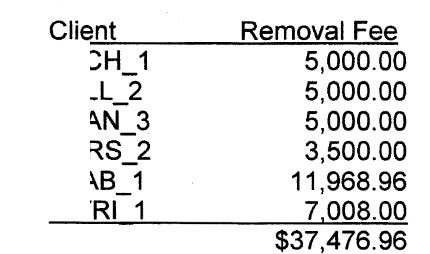
On January 15, 2015, I received a letter from Valeo stating that I owed $37,476.96 in ‘Removal Fees,’ essentially a penalty for clients who chose to continue their relationship with me elsewhere.
______________________________________
The letter broke that number down.
It was based on six clients.
Four of those six clients were paying annual fees of $5,000 or less.
One was paying $3,500.
Below is the portion of the demand letter showing the amount and client breakdown:
According to Valeo’s own internal reporting, their client model was structured around significantly higher fee levels.
The lowest target tier began at:
$10,000 in annual fees
Below is the portion of Valeo’s internal report showing the minimum target client tier:
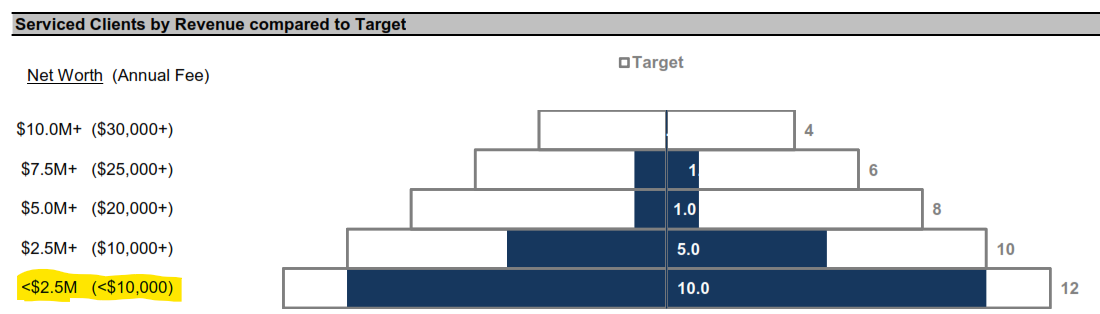
Clients paying $5,000 or less were not within any target category.
They fell below the firm’s stated range.
______________________________________
The firm was demanding compensation for the loss of clients that their own internal metrics categorized as being well below their target business model.
______________________________________
Several weeks later, on February 10, 2015, a second letter was sent—this time from legal counsel.
The amount remained the same.
The tone had changed.
The amount was now described as a debt.
The letter referenced:
- collection efforts
- potential legal action
- recovery of attorney fees and costs
______________________________________
The documents referenced in these letters included the Employment Agreement.
That agreement states that compensation is defined in a separate Compensation Agreement.
______________________________________
In Part 4, I will walk through what was provided—and what was not—when I asked for the agreement that actually defined compensation.


No comments:
Post a Comment